Candidate Sourcing
September 23, 2026
The True Cost of an Empty Candidate Pipeline: How Open Roles Kill Startup Momentum
An empty candidate pipeline is one of the most expensive problems in startup hiring. See the hidden costs of reactive recruiting and how to build a proactive pipeline before roles become urgent.
Every startup founder knows the feeling. The product roadmap is ambitious, customers want new features, sales opportunities are growing, and investors expect faster execution. The vision is clear, but turning it into reality depends on having the right people in place.
Then hiring slows down. A key engineer resigns, the sales leader you've been searching for is still stuck in interviews, and Customer Success is stretched beyond capacity. Marketing can't execute because the team doesn't have enough people to keep up.
Suddenly, growth initiatives begin to stall. Not because the strategy is wrong, but because there aren't enough people to execute it.
Most founders call this a hiring problem. The real issue often starts earlier: a candidate pipeline problem.
The difference matters because hiring problems are often treated as isolated events. A role opens, a job gets posted, resumes start coming in, interviews begin, and eventually someone joins.
A weak candidate pipeline works very differently. By the time a position becomes urgent, the organization is already weeks, or even months behind. Recruiting becomes reactive, decisions become rushed, and the business starts paying an invisible tax on every unfilled role.
That tax compounds faster than many startups realize.
A delayed engineering hire doesn't just postpone one feature release. It delays testing, pushes product launches, slows customer feedback, affects marketing campaigns, influences sales conversations, and ultimately impacts revenue.
The same is true across every function. Hiring isn't merely an HR activity. It is one of the strongest predictors of how quickly a startup can grow.
The organizations that consistently outperform competitors rarely hire faster because they're luckier. They hire faster because they never allow their candidate pipeline to run dry.
What Is a Candidate Pipeline?
A candidate pipeline is an organized pool of qualified professionals who are actively or passively engaged with your company and could potentially fill current or future roles.
Think of it as the recruiting equivalent of a sales pipeline.
Sales teams don't wait until the end of the quarter to start finding prospects. They continuously generate leads, qualify opportunities, nurture relationships, and build future revenue.
Recruiting should operate the same way. Instead of waiting for vacancies before beginning candidate sourcing, organizations continuously identify talent, build relationships, and engage promising professionals long before hiring becomes urgent.
This proactive approach transforms recruiting from a reactive process into a strategic growth function.
A healthy candidate pipeline typically includes professionals across multiple stages of engagement. Some candidates may have already interviewed for previous roles. Others may have attended company events, downloaded employer resources, connected with recruiters on LinkedIn, or expressed interest in future opportunities. Passive candidates, people who aren't actively job hunting but may consider the right opportunity, also become an important part of the pipeline.
The objective isn't to hire everyone immediately. It's to ensure that when hiring demand appears, meaningful conversations have already begun.
Why Startups Feel the Pain More Than Large Companies
Large enterprises have one advantage that startups often underestimate.
Momentum.
Their employer brand attracts candidates continuously. Recruiters specialize in individual departments. Talent acquisition teams build pipelines year-round. Internal mobility fills some vacancies before they ever reach external hiring.
Startups rarely have those advantages.
Most are operating with lean recruiting teams, or no dedicated recruiters at all. Hiring is shared between founders, department heads, and HR generalists who are simultaneously managing dozens of competing priorities.
Because of this, recruiting often begins only after someone resigns or new funding arrives.
Unfortunately, that's the most expensive time to begin searching. Building trust with exceptional candidates takes time.
Interview coordination takes time. Notice periods take time. Decision-making takes time.
Waiting until hiring becomes urgent means every one of those timelines starts later than it should.
The result is predictable. Projects slow. Existing employees become overloaded. Leadership spends increasing amounts of time interviewing instead of building the business.
Growth gradually becomes constrained, not by product-market fit or customer demand, but by recruiting capacity.
The Real Cost of an Empty Candidate Pipeline
When people discuss hiring costs, they usually think about recruiter salaries, job board subscriptions, agency fees, or recruitment software.
Those expenses are easy to measure. The much larger costs are hidden inside everyday business operations.
Lost Revenue Opportunities
Every revenue-generating role left vacant delays growth.
An unfilled Account Executive means fewer customer conversations. A missing Customer Success Manager limits expansion opportunities. A delayed marketing hire postpones campaigns that generate future pipeline.
Unlike operational expenses, these costs rarely appear on financial statements. Yet they directly influence company growth. The longer critical positions remain vacant, the larger the opportunity cost becomes.
Slower Product Development
Engineering vacancies rarely affect only engineering. One missing backend developer can delay QA timelines, design reviews, customer testing, documentation, and release schedules.
Product roadmaps become increasingly optimistic rather than realistic. Meanwhile competitors continue shipping.
Startups don't lose momentum because they're incapable of innovation. They lose momentum because execution slows.
Employee Burnout
One of the least discussed consequences of an empty candidate pipeline is the pressure placed on existing employees.
Work rarely disappears when positions remain vacant. Instead, responsibilities are redistributed.
Engineers absorb additional sprint work. Recruiters manage larger hiring loads. Managers spend evenings reviewing resumes. Customer Success teams support more accounts.
Initially, teams accept this as temporary. When hiring stretches into months, temporary becomes normal.
Burnout follows quickly. Ironically, employee burnout often creates even more vacancies, restarting the hiring cycle all over again.
Lower Hiring Quality
Urgency changes decision-making. Organizations with weak candidate pipelines often lower hiring standards because they simply need someone in the role.
Interview processes become shorter. Reference checks become less rigorous.
Skills gaps become easier to overlook. These compromises may solve today's vacancy.
They often create tomorrow's performance problems.
Hiring the wrong person is almost always more expensive than waiting for the right one. A strong candidate pipeline gives organizations something incredibly valuable: Choice.
Increased Recruitment Costs
Reactive hiring almost always costs more.
Companies become dependent on recruitment agencies, premium job advertisements, paid sourcing platforms, signing bonuses, or expensive referral incentives simply because they don't have enough qualified candidates already engaged.
Recruiting budgets increase while hiring efficiency decreases. The irony is that proactive candidate pipeline management often reduces recruitment spending because organizations spend less time searching from scratch.
Why Traditional Hiring Pipelines Break Down
Many recruiting teams work incredibly hard. The problem isn't effort. It's timing.
Traditional hiring follows a familiar sequence. A role opens, the job description is updated, and the position is posted across multiple job boards. Applications start coming in, recruiters screen candidates, interviews are scheduled, and an offer is eventually made. After the candidate serves notice and joins, the next hiring cycle begins.
This approach assumes the right candidates will be available exactly when a company needs them. In reality, hiring rarely works that neatly.
Exceptional professionals often have multiple opportunities before they even start looking for a new role. By the time a company begins recruiting, some of the strongest candidates may have already accepted offers elsewhere.
Recruiters aren't just competing for talent. They're competing for timing. That's why more organizations are shifting toward building continuous candidate pipelines instead of filling vacancies one role at a time.
What a Healthy Candidate Pipeline Looks Like
Healthy candidate pipelines don't happen accidentally. They're designed.
The strongest recruiting organizations continuously build relationships with talent regardless of whether current openings exist.
Recruiters regularly connect with professionals on LinkedIn, attend industry events, engage developer communities, participate in webinars, and maintain talent pools organized by skills rather than immediate vacancies.
Candidate information remains updated. Past interview feedback is preserved.
Silver-medalist candidates, people who nearly received previous offers, are nurtured instead of forgotten.
Hiring managers periodically review future hiring needs rather than waiting until budgets are finalized.
Most importantly, recruiters always know who they should contact first when new positions become available.
Instead of beginning at zero, they're building from momentum.
Building a Candidate Pipeline Before You Need One
The biggest mindset shift organizations must make is recognizing that candidate pipeline management isn't a hiring activity.
It's a business growth strategy.
Start by identifying the roles that consistently influence business performance. These might include software engineers, sales representatives, product managers, customer success professionals, or operations leaders.
Rather than waiting until vacancies appear, continuously map the talent market for those positions.
Build lists of potential candidates.
Follow industry communities. Maintain relationships with former applicants, and encourage employee referrals even when immediate openings don't exist.
Invest in employer branding that attracts future candidates rather than only current applicants.
Every interaction expands future recruiting options. Every conversation reduces future hiring delays.
How AI Is Changing Candidate Pipeline Management
Artificial intelligence is fundamentally changing how organizations build and maintain candidate pipelines.
Historically, recruiters spent enormous amounts of time manually searching LinkedIn, reviewing resumes, organizing spreadsheets, writing outreach emails, and updating applicant tracking systems.
These repetitive activities limited the amount of relationship-building recruiters could actually do.
Modern AI recruiting platforms automate much of this operational work.
AI can identify qualified candidates based on hiring criteria, continuously discover passive talent, rank applicants against role requirements, organize talent pools, automate outreach workflows, and surface candidates who may be strong fits for future openings.
Instead of replacing recruiters, AI expands their capacity.
Recruiters spend less time searching and more time engaging.
That distinction matters because recruiting has always been fundamentally relationship-driven.
Technology should strengthen those relationships, not replace them.
How Cooper Helps Teams Build Stronger Candidate Pipelines
One of the biggest challenges in recruiting isn't filling vacancies. It's ensuring qualified candidates are already available before those vacancies appear.
Cooper was built around this philosophy.
Instead of functioning solely as an Applicant Tracking System, Cooper combines AI-powered sourcing, screening, interviewing, and hiring workflows into a connected recruiting platform designed to keep candidate pipelines active.
Its AI sourcing agent, Coo, helps recruiters discover both active and passive candidates across large professional talent networks, making it easier to identify qualified professionals before hiring becomes urgent. Rather than manually searching profile after profile, recruiting teams receive candidate recommendations aligned with the role they're hiring for.
Once candidates enter the pipeline, Scout, Cooper's AI Screening Agent, automatically evaluates applicants against predefined hiring criteria, helping recruiters prioritize the strongest matches without spending hours reviewing resumes manually.
For organizations managing high hiring volumes, Robin, Cooper's AI Interview Agent, streamlines first-round interviews by conducting structured interviews, generating transcripts, summaries, and organized candidate insights that recruiters and hiring managers can review together.
The result isn't simply faster hiring.
It's a healthier, continuously evolving candidate pipeline that allows recruiting teams to respond quickly as hiring needs change.
The Future Belongs to Companies That Recruit Before They Hire
The companies that consistently hire exceptional talent aren't necessarily those with the largest recruiting budgets.
They're the ones that think differently about hiring. Instead of treating recruitment as a reaction to vacancies, they treat it as an ongoing investment in future growth.
Every conversation with a promising candidate becomes an asset. Every employer branding initiative strengthens future recruiting, and every relationship built today reduces hiring risk tomorrow.
That's the real purpose of a candidate pipeline. Not simply to fill jobs.
But to ensure the business never loses momentum because the right people weren't available when opportunity arrived.
In a world where talent remains one of the greatest competitive advantages, the strongest candidate pipeline often becomes the strongest business pipeline.
FAQs
What is a candidate pipeline?
A candidate pipeline is a pool of qualified candidates who are actively or passively engaged with your organization and can be considered for current or future job openings. Maintaining a healthy candidate pipeline helps companies reduce time-to-hire and improve hiring quality.
Why is a candidate pipeline important?
A strong candidate pipeline allows organizations to hire faster, reduce recruitment costs, improve candidate quality, and avoid delays caused by unexpected vacancies. Instead of starting every hiring process from scratch, recruiters can engage pre-qualified candidates who are already familiar with the company.
How do you build a candidate pipeline?
Building a candidate pipeline involves proactive sourcing, employer branding, talent community engagement, employee referrals, networking, maintaining relationships with previous applicants, and using recruiting technology to organize and nurture talent over time.
What's the difference between a candidate pipeline and a hiring pipeline?
A candidate pipeline focuses on building and nurturing relationships with potential candidates before a role opens, while a hiring pipeline tracks candidates after they have applied and are actively moving through stages such as screening, interviews, and offer management.
How does AI improve candidate pipeline management?
AI helps recruiters discover qualified candidates faster, automate sourcing, screen applications, prioritize talent, maintain organized talent pools, and identify strong matches for future hiring needs. This allows recruiting teams to spend more time engaging candidates and less time on repetitive administrative work.
Read more

Volume Hiring
High-Volume Hiring in 2026: Processes, Automation & the Modern Hiring Stack
High-volume hiring in 2026 is an operational challenge, not just a recruiting one. See the modern hiring process, the technology stack behind it, and the mistakes to avoid when scaling recruitment.
candidate screening
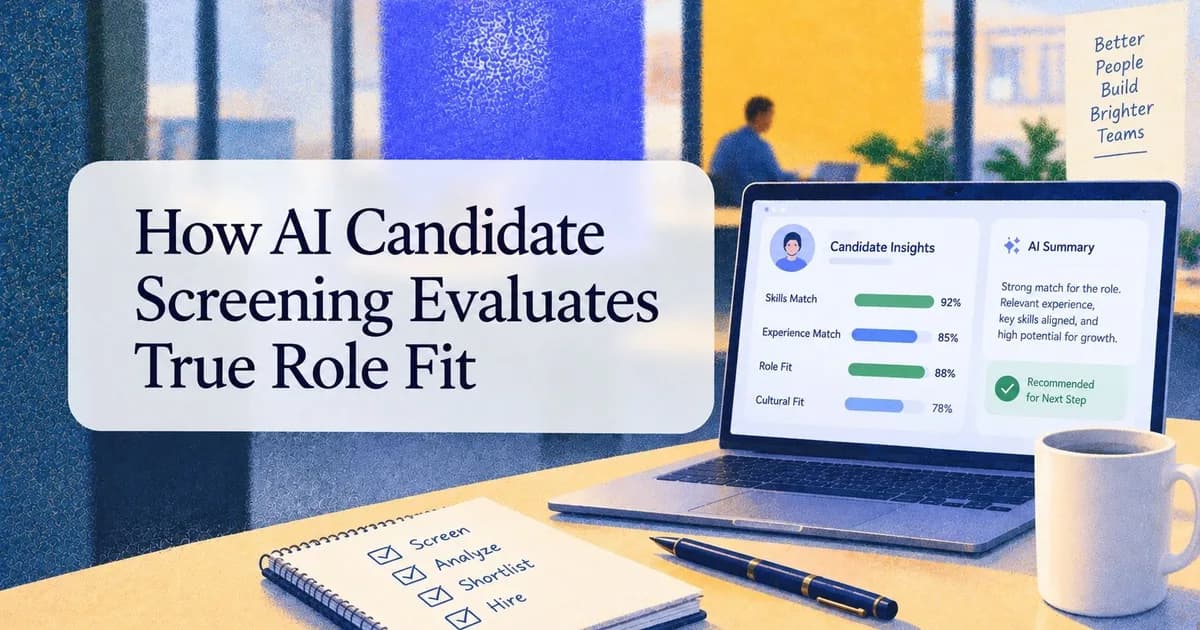
Beyond the Keyword: How AI Candidate Screening Evaluates True Role Fit in 2026
AI candidate screening is moving beyond keyword matching to evaluate true role fit, helping recruiters qualify candidates faster and more consistently. See how it works and how Scout brings this to Cooper's hiring workflow.
Candidate Sourcing
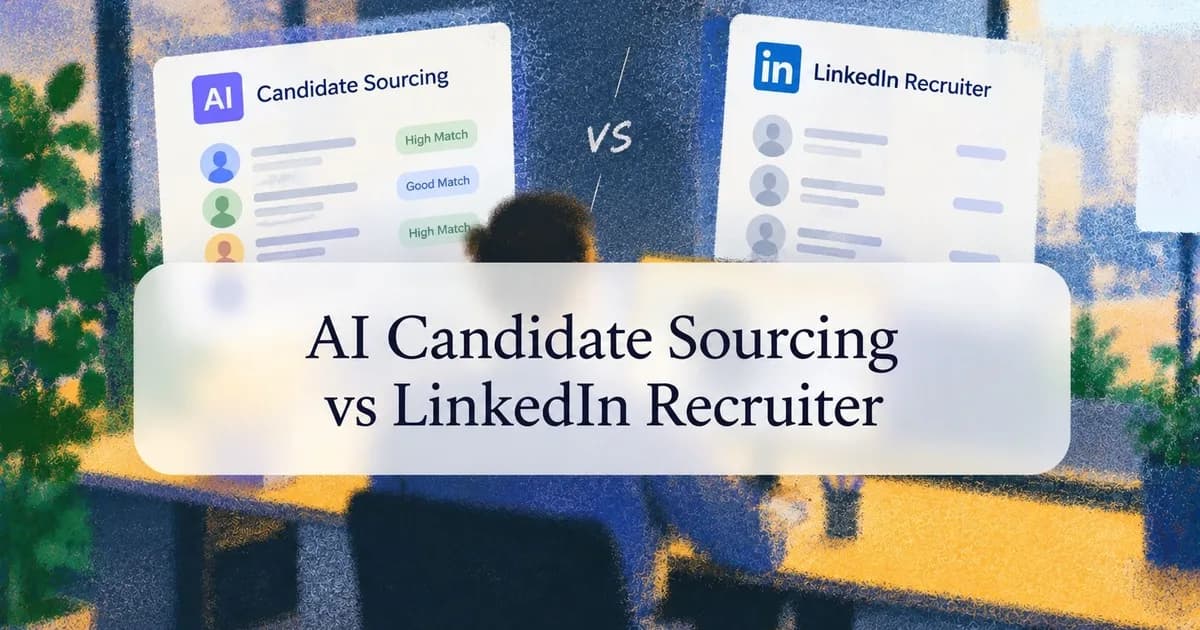
AI Candidate Sourcing vs LinkedIn Recruiter: Which Delivers Better Results?
AI candidate sourcing and LinkedIn Recruiter solve different problems. Compare how each performs on candidate discovery, passive sourcing, cost, and high-volume hiring to find the right fit for your team.