AI Recruiting
August 1, 2026
The EU AI Act Is Changing AI Hiring: Here's What Recruiters Need to Know in 2026
Learn how the EU AI Act impacts AI recruiting, candidate screening, interviews, and hiring decisions. A practical 2026 guide for recruiters and HR teams.
Artificial intelligence has become deeply embedded in modern recruitment. Recruiters use AI to source candidates, screen applications, summarize interviews, write outreach messages, and identify stronger talent matches faster than ever before.
For hiring teams, the benefits are obvious:
- Less manual work
- Faster hiring cycles
- Improved candidate experiences
- Better recruiter productivity
- More consistent hiring processes
But as AI takes on a larger role in hiring decisions, regulators are asking an important question: How do we ensure AI is being used fairly, transparently, and responsibly?
That's exactly what the EU AI Act aims to address. The legislation represents the world's first comprehensive framework for regulating artificial intelligence and it has major implications for organizations using AI in recruitment.
Beginning on August 2, 2026, many of the obligations related to high-risk AI systems under the EU AI Act become applicable across the European Union. Since AI systems used in recruitment and employment decisions are widely considered high-risk use cases, this date effectively marks the beginning of a new era for AI hiring governance.
For the first time, organizations using AI to evaluate, rank, recommend, or influence employment decisions will need to think beyond efficiency and automation.
Whether you're a startup hiring your first employees or an enterprise recruiting thousands of candidates annually, understanding the EU AI Act is quickly becoming essential.
What Is the EU AI Act?
The EU AI Act is the European Union's landmark regulation governing how artificial intelligence systems are developed, deployed, and used.
Unlike traditional regulations that apply the same rules to every technology, the EU AI Act follows a risk-based approach.
The higher the potential impact an AI system has on people's lives, the stricter the compliance requirements become.
For example:
- AI used for grammar correction carries very little risk.
- AI used for scheduling interviews carries limited risk.
- AI used to evaluate, rank, or reject candidates carries significantly higher risk.
This distinction is critical because recruitment is one of the areas receiving the highest level of regulatory attention.
Why Recruitment Is Considered High Risk
Hiring decisions affect careers, livelihoods, financial security, and access to opportunities. A recommendation generated by an AI system can determine:
- Whether a candidate receives an interview invitation.
- Whether an applicant progresses to the next stage.
- Whether an employee receives a promotion.
- Whether someone is ultimately hired.
Because employment decisions directly impact people's lives, many AI systems used in recruitment are classified as high-risk AI systems under the EU AI Act.
That doesn't mean recruiters need to stop using AI. It means organizations must ensure these systems are governed responsibly.
Which AI Hiring Activities Are Most Likely to Be Affected?
Not every AI tool used by recruiters falls under high-risk obligations. Administrative and productivity tools often remain low risk. However, organizations should pay close attention to AI systems involved in:
Resume Screening: AI tools that automatically prioritize applications or shortlist candidates based on qualifications and experience.
Candidate Ranking: Platforms that assign suitability scores or rank applicants against predefined criteria.
Interview Evaluation: AI systems that score interviews, analyze responses, or generate hiring recommendations.
Internal Mobility and Promotions: AI tools that recommend employees for promotions, transfers, or future opportunities.
Hiring Recommendations: Systems that influence who advances through the hiring funnel.
If AI is actively shaping employment decisions, it deserves closer governance and oversight.
The Biggest Misconception About the EU AI Act
One of the most common myths surrounding the legislation is: "Our vendor handles compliance."
Unfortunately, it's not that simple.
AI providers have responsibilities under the regulation, but employers remain responsible for how AI is used inside their own hiring process.
If recruiters rely on AI recommendations without understanding how they work or without maintaining meaningful human oversight, organizations may still face compliance risks.
Responsible AI is a shared responsibility between providers and employers.
Human Oversight Is Becoming Essential
Perhaps the most important concept in the entire EU AI Act is meaningful human oversight.
The principle is simple: AI should support recruiters, not replace them.
A sourcing tool can recommend candidates. A screening platform can prioritize applications. An interview assistant can summarize conversations. But recruiters and hiring managers should remain responsible for the final hiring decision.
Good human oversight means:
- Reviewing AI recommendations critically.
- Challenging unusual outputs.
- Considering additional context.
- Overriding AI recommendations when necessary.
- Remaining accountable for hiring outcomes.
The organizations that succeed with AI won't be the ones that automate every decision. They'll be the ones that combine AI efficiency with human judgment.
Transparency Matters More Than Ever
Candidates increasingly want to understand how AI influences hiring decisions. Organizations should be prepared to explain:
- Where AI is used.
- What role it plays.
- How humans remain involved.
- How candidates can ask questions.
Transparency isn't just a regulatory requirement. It's becoming an employer branding advantage.
Companies that openly communicate their AI practices often build greater trust with candidates and create a more positive hiring experience.
Compliance Doesn't Have To Be Complicated
The good news is that most organizations don't need to completely redesign their hiring process. In many cases, compliance starts with a few foundational steps:
1. Inventory Your AI Tools: Document every AI system used across recruitment.
2. Identify High-Risk Applications: Determine which tools influence employment decisions.
3. Review Your Vendors: Request documentation around governance, security, and explainability.
4. Establish Human Oversight: Ensure recruiters remain involved in important hiring decisions.
5. Improve Transparency: Clearly communicate where AI supports recruitment.
6. Train Recruiters: AI literacy is rapidly becoming a core competency for modern talent acquisition teams.
7. Monitor and Improve: Responsible AI is an ongoing process rather than a one-time project.
Organizations that start these conversations now will be significantly better prepared as regulations continue to evolve.
Why Responsible AI Will Become a Competitive Advantage
Many organizations initially view AI compliance as another regulatory burden to manage. Leading organizations are approaching it differently.
They're recognizing that the same principles required for responsible AI adoption are often the same principles that create better hiring outcomes.
When organizations invest in transparency, governance, and human oversight, they don't just become more compliant; they become better at hiring.
Responsible AI creates:
- Better governance and clearer decision-making processes.
- More consistent and repeatable hiring outcomes.
- Stronger employer brands built on trust and fairness.
- Increased confidence among candidates and employees.
- Reduced legal and reputational risk.
- Greater confidence among hiring managers and leadership teams.
- Improved collaboration between HR, legal, and technology teams.
- More defensible hiring decisions backed by documentation and structured processes.
Candidates are becoming increasingly aware of how organizations use AI during recruitment. Companies that can confidently explain their hiring process, demonstrate human oversight, and communicate their AI principles openly will stand out in the market.
Trust is quickly becoming a competitive differentiator.
The same applies internally.
Hiring managers are more likely to trust AI recommendations when they understand how those recommendations are generated and know that recruiters remain in control of decisions.
Executives are more comfortable scaling AI initiatives when governance frameworks already exist. Regulators are more comfortable with organizations that can demonstrate accountability and transparency.
In many ways, the EU AI Act is accelerating a shift that was already underway: moving from "AI at all costs" to "AI you can trust."
That's why responsible AI shouldn't be viewed as a legal exercise. It's a hiring strategy. And increasingly, it will become a competitive advantage.
The Future of Hiring Isn't Less AI. It's Better AI.
Artificial intelligence will continue transforming recruitment over the next decade.
- Candidate sourcing will become faster.
- Screening will become more efficient.
- Administrative work will continue to disappear.
Recruiters will spend less time managing processes and more time building relationships, influencing hiring decisions, and creating exceptional candidate experiences.
The question is no longer: "Should we use AI in hiring?"
For most organizations, that decision has already been made.
The real question has become: "How do we use AI responsibly, transparently, and effectively?"
The companies that succeed won't necessarily be the ones using the most AI. They'll be the ones using AI most thoughtfully.
They'll understand where automation creates value and where human judgment remains essential. They'll build hiring processes that are explainable rather than opaque. They'll prioritize transparency over black-box decision making. They'll view governance as an enabler of innovation rather than an obstacle to it.
The EU AI Act provides one of the first global frameworks for what responsible AI hiring should look like.
At its core, the regulation reinforces something great recruiters have always known:
- Hiring is fundamentally human.
- Technology can improve decisions.
- Technology can accelerate processes.
- Technology can surface insights.
But technology should never replace accountability, empathy, context, or professional judgment. Organizations that invest in governance, transparency, documentation, AI literacy, and human oversight today will be significantly better positioned tomorrow.
Not simply because regulators expect it. But because candidates, employees, and hiring managers increasingly expect it too.
The future belongs to organizations that can move fast without sacrificing trust, scale efficiently without sacrificing fairness, and embrace innovation without losing the human element that makes hiring work in the first place.
The future of hiring isn't less AI. It's better AI.
Download the Complete EU AI Act Guide for Recruiters
To help recruiting teams navigate these changes, we've created a practical resource:
The EU AI Act Guide 2026: Everything Recruiters Need to Know About AI Hiring Compliance
Inside the guide you'll learn:
- How the EU AI Act classifies AI risk
- Which recruiting activities are considered high risk
- Human oversight requirements explained in plain English
- Vendor due diligence frameworks
- AI hiring compliance checklists
- A practical implementation roadmap for recruiters and HR teams
If your organization is using AI for sourcing, screening, matching, interviewing, or hiring decisions, this guide will help you prepare for the future of responsible AI hiring.
Download the guide and start building a hiring process that is faster, smarter, and more trustworthy.
Brought to you by Cooper — the AI recruiting platform built to help teams hire efficiently while keeping recruiters at the center of every hiring decision.
Read more
candidate screening
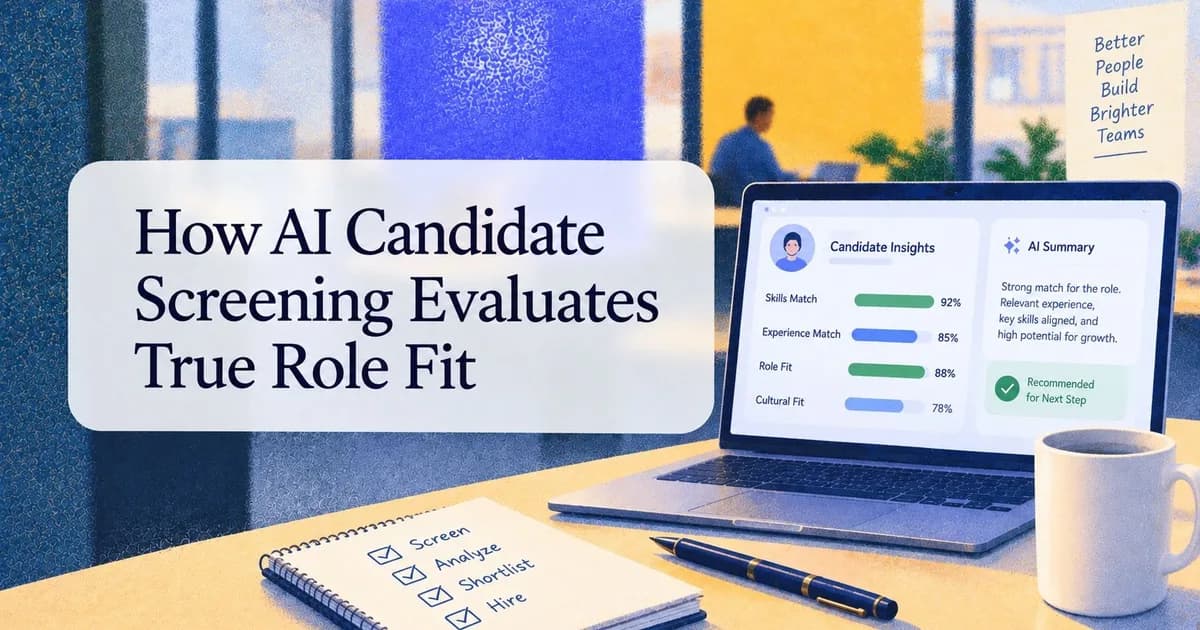
Beyond the Keyword: How AI Candidate Screening Evaluates True Role Fit in 2026
AI candidate screening is moving beyond keyword matching to evaluate true role fit, helping recruiters qualify candidates faster and more consistently. See how it works and how Scout brings this to Cooper's hiring workflow.
Candidate Sourcing
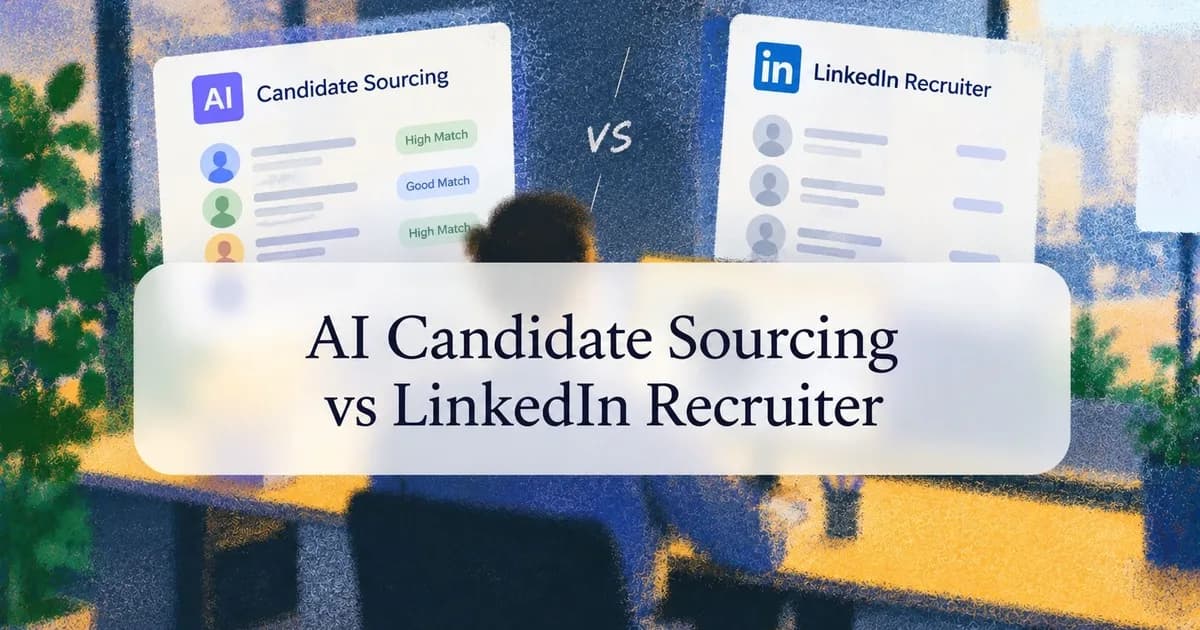
AI Candidate Sourcing vs LinkedIn Recruiter: Which Delivers Better Results?
AI candidate sourcing and LinkedIn Recruiter solve different problems. Compare how each performs on candidate discovery, passive sourcing, cost, and high-volume hiring to find the right fit for your team.
AI Recruiting
15 Recruitment Metrics Every Hiring Team Should Track in 2026
A complete framework of 15 recruitment metrics covering speed, efficiency, cost, quality, candidate experience, and pipeline health, and how AI recruiting is changing what good measurement looks like in 2026.