Volume Hiring
September 21, 2026
High-Volume Hiring in 2026: Processes, Automation & the Modern Hiring Stack
High-volume hiring in 2026 is an operational challenge, not just a recruiting one. See the modern hiring process, the technology stack behind it, and the mistakes to avoid when scaling recruitment.

There was a time when hiring 500 people simply meant hiring more recruiters. If applications doubled, companies doubled their recruiting team.
If hiring targets increased, calendars became fuller, inboxes became noisier, and recruiters worked longer hours.
That model worked when hiring demand was relatively predictable. It doesn't anymore.
Today, a logistics company might need to hire 300 warehouse associates in six weeks. A customer support organization may open hiring across three continents overnight. A fast-growing SaaS company can go from hiring ten engineers a quarter to hiring fifty after a funding round.
The scale of hiring has changed. But in many organizations, the hiring process hasn't.
Recruiters are still manually sourcing candidates, reviewing hundreds of resumes, scheduling interviews one by one, following up over email, and updating applicant tracking systems manually.
The result isn't just recruiter burnout. It's slower hiring, higher candidate drop-off, inconsistent evaluation, and growing hiring costs.
This is why high-volume hiring is no longer just a recruiting challenge. It's an operational challenge.
And in 2026, the companies winning high-volume recruitment aren't necessarily employing the largest recruiting teams.
They're building better hiring systems.
This guide explains what high-volume hiring looks like today, why traditional recruiting models struggle at scale, the modern hiring process companies are adopting, and the technology stack enabling faster hiring.
What Is High-Volume Hiring?
High-volume hiring refers to recruiting large numbers of candidates within a relatively short period while maintaining hiring quality, consistency, and candidate experience.
Unlike traditional recruiting, where recruiters manage a handful of specialized positions simultaneously, high-volume hiring focuses on efficiently moving hundreds, or sometimes thousands of candidates through the hiring funnel.
Common examples include:
• Retail hiring
• Customer support hiring
• Manufacturing recruitment
• Logistics hiring
• Healthcare staffing
• Hospitality recruitment
• Sales hiring
• Graduate recruitment
• Seasonal hiring
• Franchise expansion
Success isn't measured only by how many people get hired. It's measured by how efficiently the entire hiring operation performs.
Why High-Volume Hiring Has Become More Complex
Hiring at scale isn't difficult because there are more candidates. It's difficult because every candidate creates work.
Every application must be reviewed. Every interview scheduled. Every candidate communicated with. Every hiring manager updated. Every decision documented.
Now imagine doing that thousands of times each month.
Most recruiting teams aren't limited by hiring knowledge. They're limited by operational capacity.
The traditional recruiting process creates bottlenecks at every stage:
• Sourcing candidates manually
• Reviewing applications individually
• Scheduling interviews
• Collecting interview feedback
• Coordinating hiring managers
• Sending follow-ups
• Updating ATS records
Each task seems small. Together, they create an enormous amount of friction.
The companies hiring fastest in 2026 haven't eliminated these steps.
They've automated them.
The Modern High-Volume Hiring Process
The biggest misconception about high-volume hiring is that it's simply "doing recruiting faster."
It's not. It's redesigning recruiting altogether.
Instead of treating every candidate as an independent workflow, modern organizations build hiring systems that move candidates continuously through the funnel.
A modern high-volume hiring process typically follows six connected stages.
Stage 1: Continuous Candidate Sourcing
Traditional hiring begins when a role opens. Modern hiring begins long before.
Companies now build ongoing talent pipelines using AI candidate sourcing, employee referrals, internal databases, career sites, and passive talent discovery.
Rather than restarting sourcing for every new role, recruiters work from continuously refreshed candidate pools.
This significantly reduces time-to-fill.
Stage 2: Automated Candidate Screening
When hundreds or thousands of applications arrive, manual screening becomes impossible.
AI candidate screening software helps evaluate applicants against predefined hiring criteria such as required skills, qualifications, certifications, location, work authorization, and role-specific requirements.
Recruiters no longer review every resume. Instead, they review the most relevant candidates first.
That shift dramatically improves recruiter productivity without sacrificing hiring quality.
Stage 3: Structured Candidate Interviews
Interview scheduling often becomes the biggest operational bottleneck in high-volume hiring.
Modern hiring teams increasingly use AI interview software to conduct structured first-round interviews.
Candidates complete interviews on demand, while recruiters receive interview summaries, transcripts, and standardized evaluation data.
Instead of coordinating hundreds of calendars, recruiters focus on reviewing qualified candidates.
Stage 4: Automated Workflow Management
Every hiring process contains repetitive work.
• Interview reminders
• Status updates
• Candidate follow-ups
• Approval routing
• Pipeline progression
Recruiting automation software eliminates much of this operational workload. The hiring process continues moving, even when recruiters aren't manually updating every stage.
Stage 5: Human Decision Making
Automation doesn't replace recruiters. It changes where recruiters spend their time.
Instead of managing logistics, recruiters focus on evaluating top candidates, partnering with hiring managers, and closing offers.
That's where human judgment creates the most value.
Stage 6: Continuous Optimization
Modern hiring teams treat recruiting like a business process.
They monitor:
• Time-to-hire
• Time-to-shortlist
• Interview completion rates
• Candidate drop-off
• Offer acceptance
• Source effectiveness
• Recruiter productivity
• Cost per hire
These metrics help identify bottlenecks before they become hiring problems.
Traditional High-Volume Hiring vs AI-Powered Hiring
The difference between traditional and modern hiring isn't just automation.
It's operating philosophy.
Category | Traditional High-Volume Hiring | AI-Powered High-Volume Hiring |
Candidate Sourcing | Manual recruiter searches | Continuous AI-powered sourcing |
Resume Screening | Manual review | AI candidate screening |
Interview Scheduling | Recruiter coordination | Automated interview workflows |
Candidate Evaluation | Inconsistent across recruiters | Standardized evaluation |
Workflow Management | Manual stage updates | Recruiting workflow automation |
Recruiter Focus | Administrative work | Hiring decisions and relationships |
Hiring Speed | Slower and recruiter-dependent | Faster and scalable |
Candidate Experience | Delayed communication | Faster, more responsive process |
Scalability | Requires more recruiters | Scales through automation |
The companies winning high-volume hiring today aren't hiring faster because recruiters work harder.
They're hiring faster because the system does more of the operational work.
The Technology Stack Behind Modern High-Volume Hiring
Hiring at scale requires more than an ATS. It requires an integrated hiring stack.
The strongest high-volume hiring teams typically rely on five core technologies.
AI Candidate Sourcing
Continuously discovers and prioritizes qualified candidates across multiple talent pools before recruiters begin searching manually.
This helps build stronger pipelines while reducing sourcing effort.
AI Candidate Screening
Automatically evaluates and prioritizes applicants based on predefined hiring criteria, allowing recruiters to focus on the most qualified candidates first.
AI Interview Software
Conducts structured first-round interviews and generates standardized evaluations.
Recruiting Workflow Automation
Automates repetitive tasks such as candidate communication, interview scheduling, follow-ups, and stage progression, keeping hiring processes moving without constant manual intervention.
Recruiting Analytics
Provides visibility into hiring performance by tracking pipeline health, hiring velocity, recruiter productivity, source effectiveness, and conversion rates.
Together, these systems create a connected hiring engine instead of disconnected recruiting tasks.
The Biggest Benefits of Hiring Automation
Organizations rarely invest in hiring automation simply to reduce manual work. They invest because it helps them hire faster, improve recruiter efficiency, and deliver better business outcomes.
Faster Time-to-Hire
Automation removes unnecessary delays between hiring stages by automatically triggering screening, scheduling, communication, and follow-ups.
Candidates move through the hiring funnel faster, reducing the risk of losing top talent.
Better Recruiter Productivity
Automation handles repetitive administrative work so recruiters spend less time coordinating workflows and more time engaging candidates, partnering with hiring managers, and making hiring decisions.
Higher Candidate Quality
Consistent qualification frameworks and automated screening help recruiters build stronger shortlists and focus on candidates with the highest likelihood of success.
Improved Candidate Experience
Fast, consistent communication keeps candidates informed throughout the hiring process.
Better responsiveness leads to higher engagement, while slow hiring often results in candidate drop-off.
Lower Cost Per Hire
By increasing recruiter capacity and reducing dependence on external agencies, hiring automation helps organizations lower recruiting costs over time.
Greater Hiring Consistency
Standardized workflows ensure candidates are evaluated using the same criteria across recruiters, teams, and locations, improving fairness and hiring quality.
Common Mistakes Companies Make in High-Volume Hiring
Many organizations assume hiring more recruiters is the answer to scaling recruitment. In reality, inefficient processes often create bigger bottlenecks than limited headcount.
Here are the most common mistakes to avoid.
Mistake #1: Scaling People Before Processes
Adding recruiters to broken workflows rarely improves hiring outcomes.
Without standardized processes, larger recruiting teams simply create more coordination, inconsistency, and operational complexity.
Mistake #2: Automating Bad Hiring Processes
Technology amplifies whatever process already exists. If qualification criteria or hiring workflows are inconsistent, automation only accelerates those problems.
Optimize the process before automating it.
Mistake #3: Measuring Activity Instead of Outcomes
High recruiting activity doesn't always translate into better hiring. Instead of tracking resumes reviewed or interviews scheduled, focus on metrics such as quality of hire, time-to-fill, conversion rates, and recruiter productivity.
Mistake #4: Ignoring Candidate Experience
Candidates remember how companies communicate throughout the hiring process. Slow responses, poor communication, and unnecessary delays can damage the employer brand, even among candidates who aren't hired.
Mistake #5: Treating Automation as a Replacement for Recruiters
Hiring automation isn't designed to replace recruiters.
Its purpose is to remove repetitive administrative work so recruiters can focus on relationship-building, strategic decision-making, and delivering a better hiring experience where human judgment creates the most value.
Why Cooper Is Built for High-Volume Hiring
High-volume hiring doesn't fail because recruiters lack experience. It fails because traditional hiring systems weren't designed to manage thousands of candidates efficiently.
Cooper is an AI hiring platform built specifically to help organizations hire at scale by connecting sourcing, screening, interviewing, and workflow automation into one unified recruiting experience.
With Coo for AI-powered candidate sourcing, Scout for automated candidate screening, and Robin for structured AI interviews, Cooper helps recruiting teams reduce manual work while keeping candidates moving through the hiring funnel.
Instead of adding more recruiters every time hiring demand increases, organizations can build a scalable hiring engine that grows with the business.
For startups, scaleups, enterprise teams, and organizations managing high-volume hiring, the future isn't simply hiring more people.
It's building a smarter hiring system.
Final Takeaway
The future of high-volume hiring isn't about building bigger recruiting teams. It's about building better recruiting systems.
Organizations that continue relying on manual sourcing, resume reviews, interview coordination, and disconnected hiring tools will find it increasingly difficult to compete for talent.
The organizations that succeed in 2026 will be those that combine AI-powered sourcing, intelligent candidate screening, structured interviews, and workflow automation into one connected hiring process.
In high-volume hiring, speed matters. Consistency matters. Candidate experience matters.
But the biggest competitive advantage is building a hiring system that scales, without requiring recruiter workload to scale alongside it.
FAQs
1. What is high-volume hiring?
High-volume hiring is the process of recruiting a large number of employees within a short timeframe while maintaining hiring quality, speed, and consistency. It is commonly used for retail, logistics, manufacturing, healthcare, customer support, hospitality, graduate recruitment, and other fast-growing organizations.
2. What is high-volume hiring software?
High-volume hiring software helps recruiting teams automate repetitive hiring tasks such as candidate sourcing, resume screening, interview scheduling, workflow management, and candidate communication. These platforms enable organizations to process large applicant volumes more efficiently while improving recruiter productivity and reducing time to hire.
3. How does AI improve high-volume hiring?
AI improves high-volume hiring by automating time-consuming recruiting tasks. AI can source candidates, screen applications, prioritize qualified applicants, conduct structured first-round interviews, automate hiring workflows, and provide recruiters with actionable insights. This allows recruiting teams to hire more people without proportionally increasing recruiter headcount.
4. What industries benefit most from high-volume hiring automation?
High-volume hiring automation delivers the greatest value for industries that process large numbers of applicants, including retail, logistics, manufacturing, customer support, hospitality, healthcare, call centers, warehouse operations, seasonal hiring, franchise businesses, and graduate recruitment programs.
5. Can AI replace recruiters in high-volume hiring?
No. AI is designed to automate operational tasks, not replace recruiters. Recruiters remain responsible for building relationships, evaluating candidates, collaborating with hiring managers, negotiating offers, and making final hiring decisions. AI simply helps recruiters spend less time on repetitive work and more time on strategic hiring activities.
6. What should companies look for in a high-volume hiring platform?
The best high-volume hiring platforms combine several capabilities into one connected workflow, including AI candidate sourcing, AI candidate screening, AI interview software, recruiting workflow automation, ATS integration, candidate communication, analytics, and reporting. Organizations should prioritize platforms that reduce manual work while improving hiring speed, candidate quality, and recruiter efficiency.
Read more
candidate screening
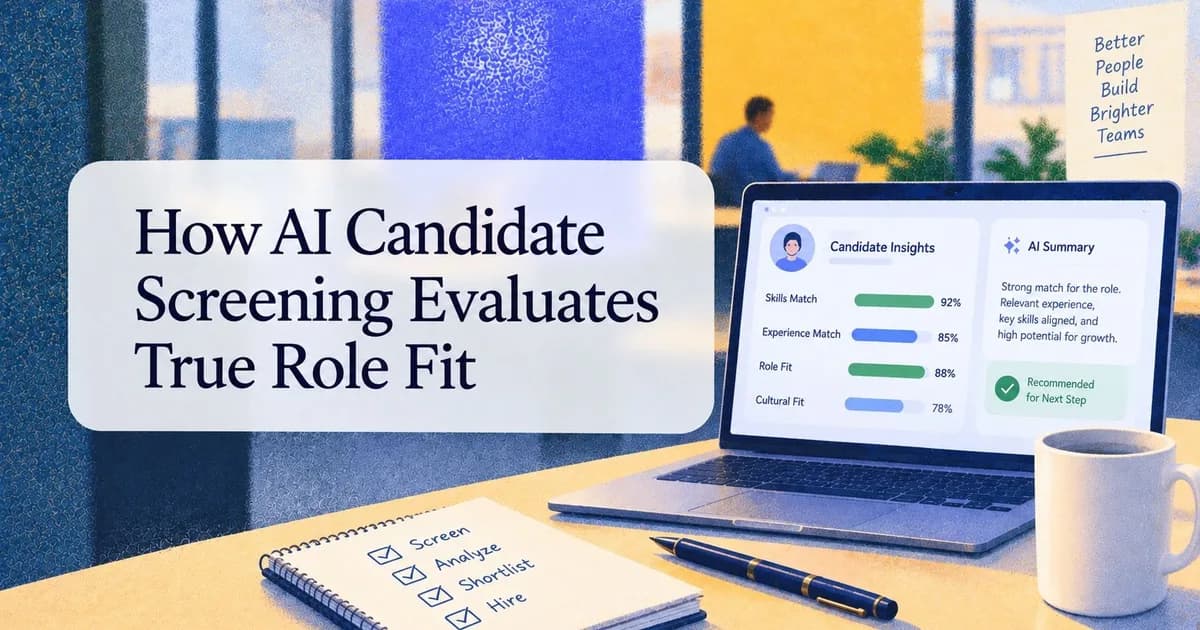
Beyond the Keyword: How AI Candidate Screening Evaluates True Role Fit in 2026
AI candidate screening is moving beyond keyword matching to evaluate true role fit, helping recruiters qualify candidates faster and more consistently. See how it works and how Scout brings this to Cooper's hiring workflow.
Candidate Sourcing
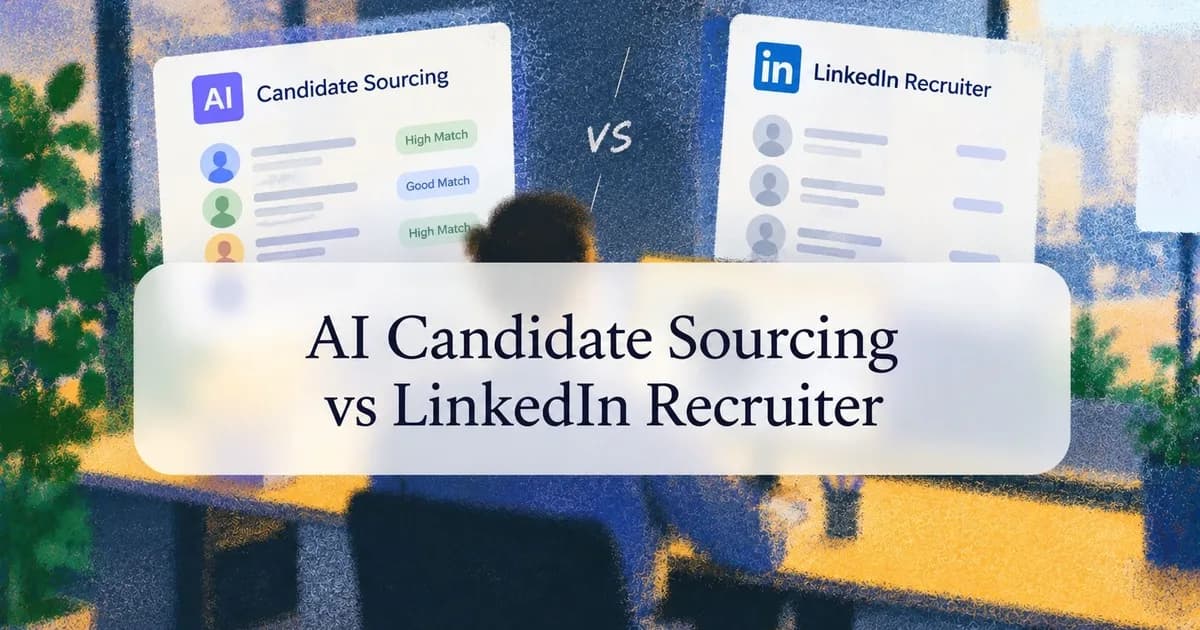
AI Candidate Sourcing vs LinkedIn Recruiter: Which Delivers Better Results?
AI candidate sourcing and LinkedIn Recruiter solve different problems. Compare how each performs on candidate discovery, passive sourcing, cost, and high-volume hiring to find the right fit for your team.
AI Recruiting
15 Recruitment Metrics Every Hiring Team Should Track in 2026
A complete framework of 15 recruitment metrics covering speed, efficiency, cost, quality, candidate experience, and pipeline health, and how AI recruiting is changing what good measurement looks like in 2026.