Applicant Tracking System
November 27, 2026
Greenhouse vs Lever: Which Recruiting Platform Is Better for Growing Teams?
Greenhouse or Lever? Compare sourcing, screening, interviewing, AI, reporting, ease of use and pricing, and see which ATS fits your growing team's hiring needs.
Greenhouse and Lever are two of the names that come up most often when a growing company decides it has outgrown a lightweight applicant tracker and needs something that can support a proper recruiting function. Both have been on the market for more than a decade, both are sold on custom quotes to mid-market and larger companies, and both now ship a long list of AI features.
The difference lies in what each product was originally designed to do well. Greenhouse built its reputation on structured hiring, with interview kits and scorecards that keep every interviewer assessing the same things, whereas Lever was built from the start as an ATS and a candidate CRM in one record, which makes it especially comfortable for teams that spend a lot of their time nurturing passive talent.
In this comparison we look at sourcing, screening, interviewing, AI, reporting, ease of use and pricing, drawing on each vendor's own pricing pages, product pages, release notes and help documentation rather than third-party summaries.
Before reading on, it is useful to have a rough sense of how many hires you expect to make over the next year, how much of your pipeline comes from outbound sourcing compared with inbound applications, and how formal you want your interview process to be as the team grows.
Greenhouse vs Lever: At a Glance
Greenhouse is a hiring platform centered on structured hiring, where every job has defined attributes, interview kits and scorecards. It recently grouped its products into what it calls the Orchestrated Hiring Ecosystem, which brings together the ATS, sourcing, scheduling, Voice AI interviewing and Real Talent fraud detection with the MyGreenhouse job seeker network. Pricing is quote based across three plans named Core, Plus and Pro.
Lever, now part of Employ, sells LeverTRM, a product that combines an applicant tracking system and a recruiting CRM so that leads and applicants live in the same profile. Its core AI includes Talent Fit matching, AI interview transcripts and summaries, a Screening Companion, candidate loss risk alerts and fraud signals, with conversational AI screening by VONQ, Interview Intelligence and Candidate Insights sold as add-ons. Lever does not publish prices either, and says pricing scales with team size and hiring needs.
Which one fits better depends on how much you rely on sourcing and nurture, how structured your interviews need to be, how much AI help you want at the top of the funnel, which HR and scheduling tools you need to connect, and what you are able to spend.
Greenhouse | Lever | |
Best for | Growing and enterprise teams that want a consistent, structured interview process across many hiring teams | Growing teams that source heavily and want ATS and CRM data in one candidate record |
ATS | ✓ | ✓ |
Candidate sourcing | CRM and Chrome extension on all plans, Sourcing Automation on Plus, new Sourcing product in closed beta | Built-in CRM, Nurture campaigns, Chrome extension, talent rediscovery, 200+ job boards |
Candidate screening | Talent Matching, keyword suggestions, Real Talent fraud and spam detection | Talent Fit, Screening Companion, Fraud Signals, AI Screening by VONQ (add-on) |
AI capabilities | 17 documented AI features, Voice AI interviews, Greenhouse in Claude (beta) | Core AI suite plus AI Interview Companion, VONQ screening and Candidate Insights add-ons |
Interview management | Interview kits, scorecards, native scheduling, AI Notetaker | Scorecards, interview and intake guides, Easy Book self-scheduling, AI transcripts and summaries |
Reporting | Greenhouse Analytics, AI report filters and BI Connector on Plus | Visual Insights dashboards, funnel and source reports, Nurture dashboard |
Integrations | 250+ integration partners, Harvest API, MCP | Marketplace of roughly 185 partners across 27 categories |
Pricing | Custom quote for Core, Plus and Pro | Custom quote, scaled by team size and hiring needs |
High-volume hiring | Talent Matching, fraud detection, Voice AI first-round interviews | VONQ conversational screening, Fraud Signals, Candidate Insights assessments |
Ease of use (G2) | 8.5 / 10 | 8.7 / 10 |
Pricing checked: Nov 2026. Sources: Greenhouse and Lever pricing, product and help pages, G2 comparison page for ease of use scores.
Quick answer
What is the main difference between Greenhouse and Lever?
Greenhouse is built around structured hiring, with interview kits and scorecards that keep every interviewer assessing the same attributes. Lever combines an ATS and a recruiting CRM in one candidate profile, which suits teams that source heavily and nurture passive talent. Both sell on custom quotes and both offer a broad set of AI features.
What is Greenhouse?
Greenhouse is a recruiting platform designed around the idea that good hiring decisions come from assessing every candidate for a role against the same, agreed criteria. When a job is opened, the hiring team defines the attributes they are looking for, interviewers are given interview kits that tell them which attributes to probe and which questions to ask, and feedback is captured in scorecards rather than as loose impressions. For a company that is adding hiring managers quickly, that structure is often the main reason Greenhouse makes the shortlist, because it keeps new interviewers aligned without needing a recruiter in every debrief.
Around that core, Greenhouse covers job approvals, application review, offers and onboarding, with a CRM and Chrome extension for sourcing on every plan and a separate Sourcing Automation product for outbound email sequences on the Plus plan. Its newer products are arranged under the Orchestrated Hiring Ecosystem, which links the ATS with sourcing, scheduling, Voice AI interviewing, Real Talent identity and fraud checks, and MyGreenhouse, the profile network that millions of job seekers use to apply.
AI is woven into many individual steps rather than packaged as one assistant. Greenhouse's support center documents 17 AI features, from scorecard summaries and interview question suggestions to Talent Matching and an offer acceptance forecast. Customers on Core, Plus and Pro can also connect Greenhouse to Claude through an open beta plugin that prepares a daily brief, reviews pipelines, drafts scorecards from interview notes and can advance candidates, with each user only able to see and do what their own Greenhouse permissions allow.
Greenhouse Key Features
- Applicant tracking: job approvals, configurable stages, application review, offers and candidate communication.
- Structured hiring: job attributes, interview kits and scorecards that keep every interviewer assessing the same things.
- Interview management: native scheduling and the AI Notetaker on all plans, plus Voice AI interviews sold separately.
- Candidate sourcing: CRM and Chrome extension on every plan, Sourcing Automation on Plus and Pro, and a new sourcing product in closed beta.
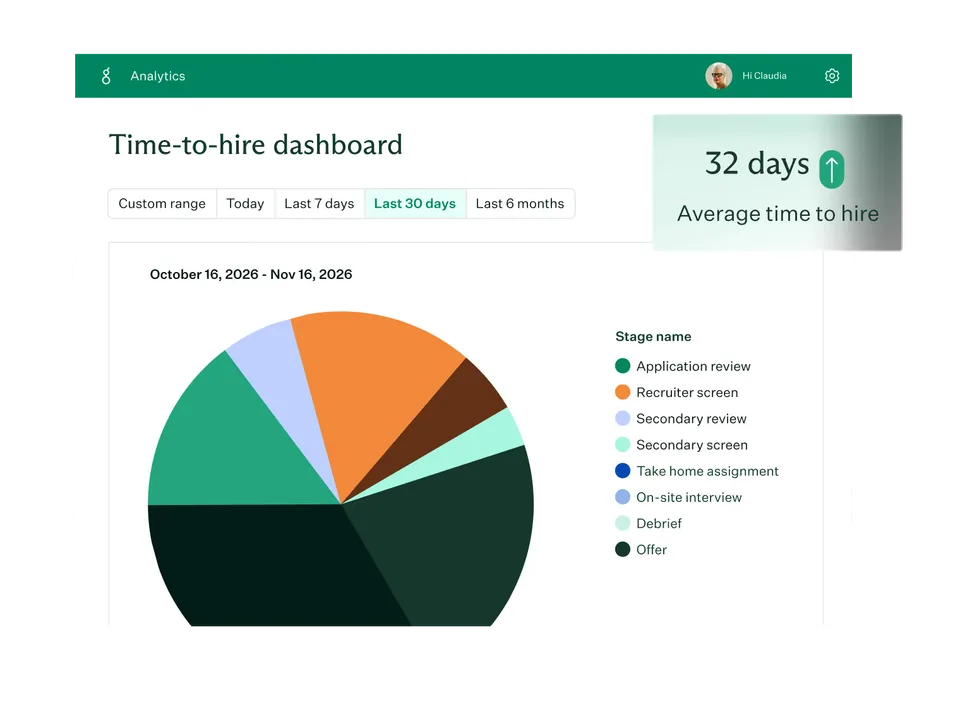
- Reporting and analytics: Greenhouse Analytics, with AI report filters and a Business Intelligence Connector on Plus and above.
- Integrations: more than 250 integration partners, the Harvest API, MCP access and the Greenhouse in Claude plugin.
- AI capabilities: Talent Matching, fraud and spam detection, scorecard summaries, question suggestions and Voice AI.
What is Lever?
Lever was founded in 2012 and has been part of Employ since 2022. Its main product, LeverTRM, takes a slightly different view of what a recruiting system should be. Instead of keeping prospects in one tool and applicants in another, Lever stores both in a single candidate profile, so a person sourced from LinkedIn two years ago, nurtured through a few emails and then hired through an inbound application carries one continuous history.
On the ATS side, LeverTRM covers job posting to more than 200 job boards, configurable pipelines, structured scorecards, interview and intake guides, a Team Review view for collaborative screening, automated scheduling and candidate self-scheduling, and reporting through Visual Insights. On the CRM side, it adds Nurture campaigns that send multi-step email sequences to leads, talent rediscovery from the existing database, and a Chrome extension for adding candidates from sites such as LinkedIn and GitHub. Optional products include Advanced Nurture, Onboarding, and a set of AI add-ons sold through Employ.
Lever's AI work has picked up noticeably over the past year. Its AI features include, Talent Fit, AI Interview Transcripts and Summaries, the AI Screening Companion, candidate loss risk alerts, Candidate Transparency and Fraud Signals as built into the platform, and AI Screening by VONQ, Employ Interview Intelligence and Candidate Insights as add-ons.
Lever Key Features
- ATS + CRM: applicants and passive leads stored in one candidate profile with a shared history.
- Candidate sourcing: Chrome extension, Nurture campaigns, talent rediscovery and posting to 200+ job boards.
- Screening: Talent Fit matching, the Screening Companion, Fraud Signals, and conversational screening by VONQ as an add-on.
- Interview management: structured scorecards, interview and intake guides, Easy Book self-scheduling links and AI transcripts and summaries.
- Automation: automated stage moves in Nurture, an Automation Hub for workflows, and candidate loss risk alerts.
- Reporting: Visual Insights dashboards covering pipeline, funnel conversion, time to fill, source of hire, offers and nurture results.
- Integrations: a marketplace with HRIS, scheduling, background check, assessment and video interview partners.
Greenhouse vs Lever: Feature-by-Feature
Greenhouse vs Lever: Candidate Sourcing
Greenhouse handles sourcing through its CRM and the Greenhouse Recruiting Chrome extension, which let recruiters capture prospects from websites or resumes without leaving the page they are on. Teams that run a lot of outbound outreach can add Greenhouse Sourcing Automation on the Plus plan, which provides email sequences with custom send schedules, an email coach that checks copy for spam triggers as it is written, and a contact lookup that Greenhouse says returns personal emails 70 to 84% of the time and work emails 80 to 85% of the time.
The most interesting development is the new sourcing product in the Orchestrated Hiring Ecosystem, which aims to show recruiters job seekers from the MyGreenhouse network who are actively looking and fit the role, inside the tools they already use. Because it is still in closed beta, buyers should treat it as a roadmap item for now.
Lever's sourcing model grows out of its CRM. The Chrome extension works across LinkedIn, GitHub, Gmail, Xing and several other sites, checks Lever for an existing profile by URL or email to avoid duplicates, and can parse a LinkedIn profile exported as a PDF.
Once a lead is in Lever, a recruiter can start a Nurture campaign from a template, personalize each touchpoint, and let the system move the opportunity from New Lead to Reached Out and then to Responded when the candidate replies, with non-responders archived or snoozed at the end. Without the Advanced Nurture add-on, campaigns are started one candidate at a time, while Advanced Nurture allows up to fifty candidates at once and shared team templates. It is also worth knowing that a running campaign cannot be edited, so mistakes mean stopping and restarting it.
Which is better for candidate sourcing?
For a growing team whose hires come mostly from outbound sourcing and long-term relationship building, Lever's single profile and built-in nurture flow are a natural fit, since leads and applicants never have to be reconciled across two systems.
Greenhouse is a strong choice when sourcing is one part of a broader structured process and the team wants outbound sequences and contact lookup managed alongside interview plans and approvals, and its MyGreenhouse-based sourcing could become a real differentiator once it moves beyond beta.
Greenhouse vs Lever: Candidate Screening
Greenhouse's screening rests on Talent Matching, part of Real Talent, where recruiters set a weighted calibration describing what matters for a role and Greenhouse scores incoming resumes against it, helped by a Talent Matching assistant that can turn a plain-language description of the ideal candidate into that calibration. Keyword suggestions help narrow application review, and resume anonymization on Pro hides identifying details from reviewers. On Plus and Pro, Real Talent adds fraud and spam detection, and Greenhouse is building identity verification into MyGreenhouse so that recruiters can see when a person's identity has been confirmed. The company's position is that these tools surface signals and that a person decides who moves forward.
Lever covers similar ground with a different set of names. Talent Fit uses AI matching and customizable criteria to rank candidates against the job, explains why each person matches, and flags gaps that are worth probing in interview, and Lever has said a Custom Matching option with weighted scoring across skills, experience, education and certifications is coming next. The Screening Companion sits on top of this, surfacing screening insights and suggested next steps for each candidate. Fraud Signals checks email validity, phone authenticity including virtual numbers, bot-like application behavior and work history consistency, and labels each signal as verified, suspicious or flagged for review.
In Lever's own pilot it flagged 30 of 121 applicants in one week, and Lever stresses that no one is automatically rejected. Teams that want screening to happen before a recruiter ever opens an application can add AI Screening by VONQ, which asks every applicant the same role-based questions in a conversational step on the careers site and returns a Candidate Dossier with a summary, the CV, the transcript and an explainable fit score.
What to consider
Both vendors now offer AI matching, fraud detection and human review, so the practical difference is where the work happens. Greenhouse keeps screening inside its structured hiring model, with calibrations that reflect the same attributes interviewers will later score. Lever, with the VONQ add-on, can move a structured first conversation to the moment of application, which may suit teams that receive more applicants than recruiters can read but do not want to rely only on resume keywords.
Greenhouse vs Lever: Interviewing
Interviewing is where Greenhouse is most clearly in its element. Interview kits tell each interviewer what to ask and what to assess, scorecards collect feedback against those attributes, and AI can suggest attributes and questions from the job description, summarize a set of scorecards into areas of agreement and disagreement, and tidy up written feedback. Greenhouse Scheduling provides scheduling links, interviewer groups and suggested interviewers based on availability, and the Greenhouse Notetaker joins Zoom, Google Meet or Teams calls to transcribe them and draft notes mapped to scorecard questions for the interviewer to review.
For a first round without recruiter time, Greenhouse Voice AI runs a two-way voice interview using the team's own questions and scoring criteria, returns an explainable evaluation whose scores recruiters can override, and is audited monthly for bias by Warden AI. Greenhouse now also offers Voice AI to employers that do not use its ATS.
Lever approaches interviews with structured scorecards and interview and intake guides, which were rebuilt with a new guide builder and guide type filter in the Winter 2026 release. Scheduling works through Google Workspace and Office 365, with Easy Book links that let candidates pick their own time, and partners such as GoodTime, ModernLoop and Cronofy for more complex panel scheduling.
The bigger story is the AI Interview Companion, which came from Lever's Pillar product. It generates interview guides, takes notes, tracks sentiment and talk time, compares candidates side by side and pushes summaries and ratings back into Lever, and recent updates added translation of summaries and transcripts into 17 languages and a one-click email that lets candidates opt out of AI recording before their interview. AI Interview Transcripts and Summaries Lite is included in the core package with a limited monthly allowance, while the Unlimited version is a paid integration.
Greenhouse vs Lever: AI Recruiting
Both companies have made AI a central part of their pitch, and both say clearly that recruiters keep the final decision, but the shape of their AI is different enough that it is worth listing each one separately.
What Greenhouse's AI does
- AI matching: Talent Matching scores resumes against a recruiter-weighted calibration, which the Talent Matching assistant can draft from a plain-language brief.
- Fraud and identity checks: Real Talent flags fraud, spam and misrepresentation early in the funnel, with identity verification connected to MyGreenhouse profiles.
- AI interviewing: Voice AI runs consistent first-round voice interviews with full transcripts and explainable evaluations, and supports ten languages beyond its base set.
- Interview support: AI Notetaker, scorecard summaries, feedback rewriting, and question and attribute suggestions.
- Insights and forecasting: Candidate Insights Assistant for questions about a candidate, AI report filters, and an offer acceptance forecast.
- AI in other tools: Greenhouse in Claude plugin lets recruiters review pipelines, prepare debriefs, draft scorecards and update candidates from inside Claude.
What Lever's AI does
- AI matching: Talent Fit ranks candidates against job requirements, explains each match and flags gaps to cover in interview.
- AI screening: the Screening Companion surfaces screening insights and next steps, and AI Screening by VONQ (add-on) runs a structured conversational screen at the point of application.
- Fraud detection: Fraud Signals checks email, phone, application behavior and work history, labelling each signal without auto-rejecting anyone.
- AI interviewing support: AI transcripts and summaries in the core product, and the AI Interview Companion (add-on) with real-time guidance, coaching insights and ratings synced to Lever.
- Candidate engagement: Candidate loss risk alerts flag strong candidates who may be losing interest, and Candidate Transparency drafts personalized rejection feedback.
- Assessments: Candidate Insights powered by ProboTalent (add-on) sends assessments and reference checks automatically when candidates apply.
In broad terms, Greenhouse has gone further on automated interviewing through Voice AI and on connecting its data to outside AI assistants, while Lever has invested more in the candidate relationship around the interview, with loss risk alerts, AI-drafted rejection feedback and a richer interview intelligence add-on.
Both lean on add-ons for their most automated pieces, so buyers should ask exactly which AI features are in the quoted package.
Greenhouse vs Lever: Reporting & Analytics
Greenhouse Analytics gives recruiting teams interactive reports on pipeline health, time to hire and conversion rates that can be filtered and pivoted without technical help. On the Plus and Pro plans, AI report filters let users describe the report they want in plain language, and the Business Intelligence Connector sends Greenhouse data to an existing warehouse or BI tool. Because feedback is captured in structured scorecards, the data behind each hiring decision is consistent enough to review later, which matters to teams that need to explain how decisions were made.
Lever's reporting lives in Visual Insights, a set of dashboards that covers pipeline and funnel conversion, time to fill, source of hire, postings, offers, a talent leader summary and DEI analytics, along with an ROI dashboard and a Data Explorer for building reports from templates. A dedicated Nurture dashboard reports reply rates, advancements to interview stages and hires for each campaign, which gives sourcing-heavy teams a clear view of which outreach actually produces hires. Lever has also added an AI Interview Companion dashboard that estimates time savings and productivity gains from interview AI.
Greenhouse vs Lever: Pricing
How Much Does Greenhouse Cost?
Greenhouse does not publish prices. Its pricing page lists three plans and says the cost depends on the plan you choose, your hiring volume and your organizational complexity, with custom pricing provided by a Greenhouse expert after a demo.
- Core: sourcing and CRM, structured interview kits and scorecards, AI Notetaker, scheduling, reporting and analytics, SSO, and Real Talent Talent Matching.
- Plus: everything in Core, plus AI-powered report filters, the Business Intelligence Connector, Greenhouse Sourcing Automation, texting, and Real Talent fraud and spam detection.
- Pro: everything in Plus, plus unlimited CRM events, enterprise-level data configuration and security, an audit log, a developer sandbox and sync, and enterprise-level Real Talent features.
Costs usually rise when a team needs a higher tier for texting, outbound sourcing automation or fraud detection, and when it adds products that are not part of any plan on the pricing page, such as Voice AI or Greenhouse Onboarding.
How Much Does Lever Cost?
Lever also works on custom quotes. Its pricing page says pricing scales with your team size and hiring needs, that every plan includes the core ATS, CRM, reporting and analytics and key integrations, and that a quote is available on request.
- AI-Powered Hiring Platform: a unified ATS and CRM, reporting dashboards and customizable reports, AI-powered candidate matching and screening, AI interview transcripts and summaries, and AI fraud prevention signals.
- Plans referenced in Lever's help center: LeverTRM and LeverTRM for Enterprise.
- Add-ons listed on the pricing page: Candidate Insights, AI Screening by VONQ, and Onboarding.
- Other paid options: Advanced Nurture for bulk campaigns and shared templates, and the AI Interview Companion or unlimited transcripts through Employ.
One detail to clarify with sales is interview transcription, because Lever's pricing page lists unlimited AI interview transcripts and summaries in the platform, while its help center describes a Lite version with a monthly allowance in the core package and a paid Unlimited version. The add-ons are where a Lever quote is most likely to grow, particularly for teams that want conversational screening and assessments for high applicant volumes.
Quick answer
How much do Greenhouse and Lever cost?
Neither vendor publishes prices. Greenhouse quotes its Core, Plus and Pro plans based on hiring volume and organizational complexity, and Lever quotes its platform based on team size and hiring needs. Costs usually rise with add-ons such as Voice AI, Onboarding, AI Screening by VONQ and Candidate Insights.
Greenhouse vs Lever: Which Is Right for Different Teams?
For Startups and Growing Teams
A company moving from a handful of hires a year to several dozen usually discovers two problems at once. Hiring managers who have never interviewed before need guidance, and recruiters can no longer rely on inbound applications to fill every role. Greenhouse is often the better answer to the first problem, because interview kits and scorecards give new interviewers a clear structure and make debriefs far easier to run as the number of hiring teams increases.
Lever is often the better answer to the second, because a team that relies on outbound sourcing can keep every lead, conversation and application in one profile and run nurture campaigns without a separate CRM. Growing teams should think honestly about which of these pressures is bigger for them over the next year or two, since both products can be quoted at a size that suits a scaling company.
For Enterprise Teams
For larger organizations, governance and integration usually decide the matter. Greenhouse's Pro plan adds an audit log, enterprise data configuration and a developer sandbox, the company holds ISO 27001, 27701 and 42001 certifications, and its integration partner list runs to more than 250 companies. Lever offers LeverTRM for Enterprise, IBM watsonx.governance behind its AI, and a marketplace that includes enterprise HR systems such as Workday, SAP SuccessFactors, UKG and ADP.
Enterprises with a large, distributed interviewer base will probably value Greenhouse's structured hiring model, while those with central sourcing teams running long nurture programs may lean toward Lever.
For High-Volume Hiring
When roles attract hundreds of applicants, the questions that matter are how quickly qualified people rise to the top, how well fraudulent applications are filtered out, and how much recruiter time goes into first-round conversations. Greenhouse answers with Talent Matching, Real Talent fraud detection and Voice AI interviews that candidates can take whenever suits them. Lever answers with Talent Fit, Fraud Signals, VONQ conversational screening at the point of application and Candidate Insights assessments. Because the most automated parts of both stacks are add-ons, teams should ask for quotes that reflect their real applicant volumes before comparing the two.
For Frontline Hiring
Frontline hiring in retail, hospitality, logistics or healthcare support tends to involve very high volume, simple hard requirements, many locations and candidates who expect a quick answer on their phone. Neither Greenhouse nor Lever was designed primarily for this kind of hiring, and both are at their best with salaried, professional roles. Greenhouse's texting on Plus and multilingual Voice AI interviews can help with hourly roles, and Lever's VONQ screening and loss risk alerts can keep applicants moving, but companies whose hiring is mostly frontline should test how each product handles location-based jobs, shift availability and mobile applications before choosing either one.
What About AI-First Recruiting Platforms?
AI-first recruiting platforms use AI agents designed to carry out parts of the recruiting workflow themselves, including candidate sourcing, screening and interviewing, with an ATS built around those agents. This approach can be especially relevant for teams facing high application volumes, for lean recruiting teams, and for hiring programs where recruiters spend most of their week on repetitive candidate evaluation.
Meet Cooper: An AI-first Recruiting Platform
Cooper is an AI recruiting platform built around AI agents that help recruiting teams source, screen and interview candidates. Coo helps teams find relevant candidates when inbound applications are not enough. Scout reviews candidates against the qualification criteria a team defines and identifies the people who meet them. Robin runs structured AI interviews and captures candidate responses and insights for the hiring team to review.
Together, the agents take on repetitive work across sourcing, screening and interviewing, while Cooper's own ATS keeps the hiring workflow connected in one place, so recruiters can spend their time on conversations with the strongest candidates and on decisions that need a person.
When Should You Consider an AI-First Recruiting Platform?
- Receives more applications than recruiters can realistically review by hand
- Needs to source candidates beyond inbound applications
- Spends a large share of its time on repetitive screening
- Has high-volume hiring requirements
- Needs consistent, structured first-round interviews
- Runs with a lean recruiting team
- Hires across multiple locations
- Wants recruiting automation that goes beyond traditional ATS workflows
Greenhouse vs Lever: Which Should You Choose?
Greenhouse and Lever serve a similar audience of growing and established companies, yet they reward different habits. Greenhouse pays off for teams that want every interviewer working from the same structure and that value governance, detailed AI documentation and automated first-round interviews, while Lever pays off for teams that source heavily, nurture talent over long periods and want leads and applicants held in a single record with AI that watches the candidate relationship.
The right choice depends on your hiring volume, the balance between inbound and outbound recruiting, how structured your interviews need to be, which integrations you rely on and the budget you have for add-ons.
Teams evaluating these platforms should also consider whether they want a traditional ATS-centered workflow with AI added around it, or a setup where AI takes a more active role in sourcing, screening and interviewing.
FAQs
Is Greenhouse better than Lever for growing teams?
It depends on what is slowing your hiring down. Greenhouse is usually the stronger choice when the priority is a consistent, structured interview process across a growing number of hiring managers, while Lever tends to suit growing teams that rely on outbound sourcing and want their CRM and ATS in one candidate profile.
How much do Greenhouse and Lever cost?
Neither vendor publishes prices. Greenhouse quotes its Core, Plus and Pro plans based on hiring volume and organizational complexity, and Lever quotes its platform based on team size and hiring needs, with add-ons such as AI Screening by VONQ, Candidate Insights and Onboarding priced separately.
Does Lever have a CRM built in?
Yes. LeverTRM combines the ATS and a recruiting CRM, so passive leads and applicants share one profile, and recruiters can run Nurture campaigns from the New Lead stage, with the Advanced Nurture add-on needed to campaign up to fifty candidates at once.
Which platform has stronger AI features?
Both have broad AI coverage. Greenhouse documents 17 AI features, offers Voice AI interviews and connects to Claude through an open beta plugin, while Lever includes Talent Fit, Fraud Signals, a Screening Companion, loss risk alerts and AI interview summaries, with conversational screening, assessments and full interview intelligence available as add-ons.
Can Greenhouse or Lever detect fraudulent candidates?
Yes. Greenhouse's Real Talent flags fraud, spam and misrepresentation and is adding identity verification through MyGreenhouse, with fraud and spam detection on the Plus plan and above. Lever's Fraud Signals check email, phone, application behavior and work history and label each signal as verified, suspicious or flagged, without rejecting anyone automatically.
Is there a free trial for Greenhouse or Lever?
Neither vendor advertises a free trial on its pricing page. Both offer demos, and the best way to compare them is to run a demo using one of your real job descriptions and interview plans.
About the author

Sohraab Joshi

Co-Founder, Cooper
Building AI recruiting platform for faster, smarter hiring.
Read more

Applicant Tracking System
Best Applicant Tracking Systems in India: 10 ATS Platforms Compared
Compare best applicant tracking systems in India, including Cooper, Zoho Recruit, Keka Hire, Darwinbox and Naukri RMS. See who each ATS suits, what to check before buying and how to choose.
Industry Insights & Trends
Introducing the Cooper Hiring Pulse
Meet the Cooper Hiring Pulse, a free monthly resource tracking hiring market conditions in the US, UK, Germany and the EU, and learn how recruiters can use it to plan smarter.

Volume Hiring
Holiday Hiring 2026: How to Hire Seasonal Workers Faster at Scale
Learn how to hire seasonal workers faster in 2026. Covers workforce planning, seasonal job descriptions, mobile applications, AI screening, structured interviews, candidate communication, onboarding and the hiring metrics that matter.